

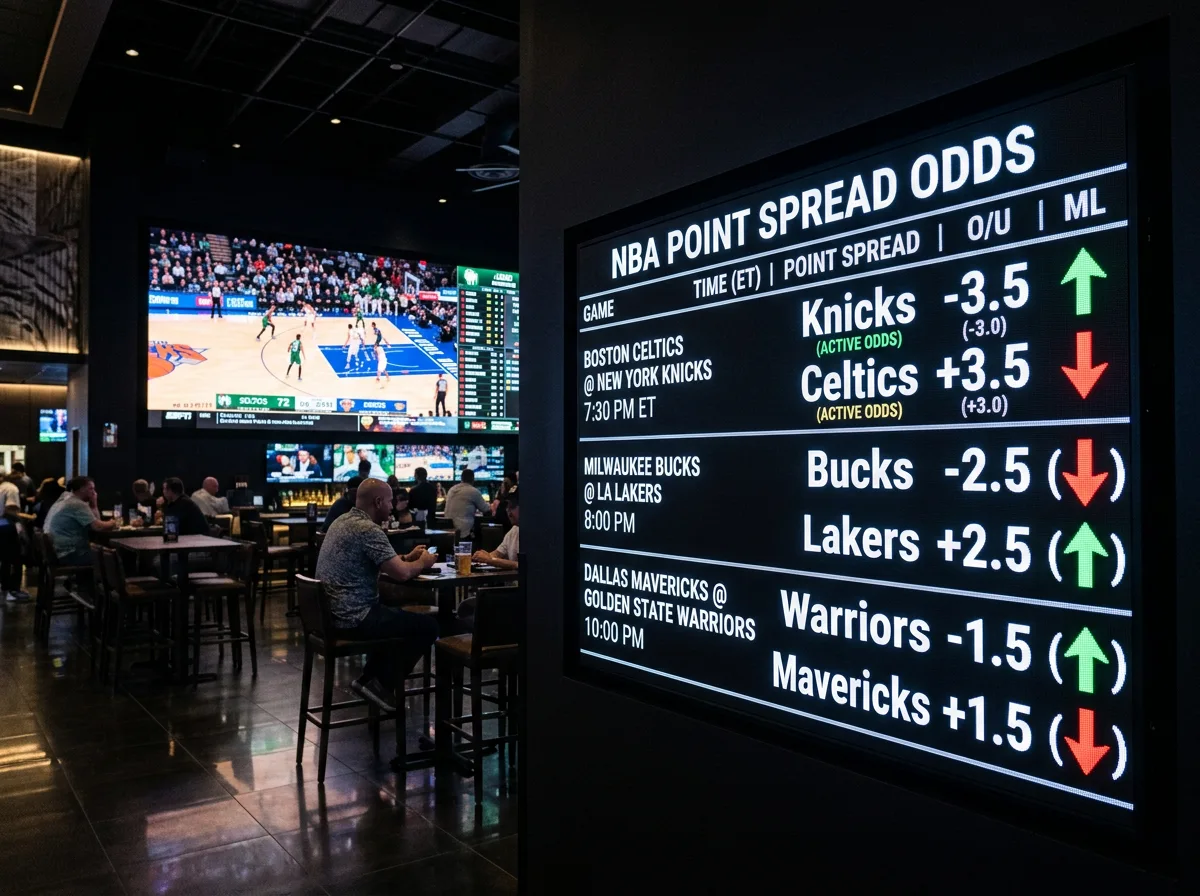
The spread opened at Knicks -3. By noon it had moved to -4. By tip-off it sat at -5.5. No injury news, no lineup changes – just money flowing toward New York. That two-and-a-half point swing told a story about who was betting and what they believed. Learning to read these movements transformed how I analyse games before placing my own bets.
Line movement reflects the collective action of everyone betting a game. When spreads shift, bookmakers are responding to either imbalanced money requiring risk adjustment or respected sharp bettors whose action they trust enough to move markets. Understanding why lines move – and what different patterns indicate – helps identify when markets have overreacted or when you should follow the flow.
Why Lines Move
Bookmakers adjust spreads for two primary reasons: balancing liability and respecting sharp action. These motivations produce different movement patterns that careful observers can distinguish. Reading movement correctly requires understanding which force is driving the shift.
Liability balancing happens when one side receives disproportionate money. If 80% of dollars back the favourite, bookmakers might move the line to attract underdog money rather than face significant exposure. These movements often align with public sentiment – lines moving toward popular teams suggest recreational money flows.
Sharp respect produces opposite patterns. When professional bettors whose long-term records demand attention bet a side, bookmakers move lines regardless of overall money distribution. A sharp bet of £50,000 on the underdog might move lines even while £200,000 of public money sits on the favourite. The sharp’s opinion outweighs the square’s volume.
Information-driven movement happens when new factors emerge. Injury reports, lineup confirmations, weather (for outdoor sports), and breaking news all trigger adjustments. NBA lines move significantly when star players are ruled out – Anindya Sen, the NBA’s integrity analyst, notes that line moves should always have basketball reasons explaining them.
Reading Movement Patterns
Early movement after lines open carries different meaning than late movement near tip-off. Sharp bettors typically act early – when lines first post and inefficiencies are largest. Public bettors act late – placing evening wagers after work without early access. Timing context shapes interpretation.
Opening line movement suggests market disagreement with bookmaker assessments. If a spread opens at -5 and immediately moves to -6.5 before significant public betting, sharp money disagreed with the opening number. The original -5 was deemed wrong by those who bet professionally.
Reverse line movement occurs when lines move opposite to public betting percentages. If 75% of bets back the Celtics yet the line moves toward their opponent, sharp money on the underdog forced the adjustment despite imbalanced public action. These patterns strongly suggest professional disagreement with recreational consensus.
Steam moves represent dramatic, coordinated shifts across multiple bookmakers simultaneously. When a line sits at -4 everywhere, then suddenly appears at -5.5 everywhere within minutes, a syndicate or respected sharp hit multiple books. These moves close quickly – by the time most bettors notice, the value has evaporated.
Timing and Magnitude
Small movements of half a point rarely indicate meaningful sharp activity. These shifts might reflect routine liability balancing or minor opinion adjustments. Focus analysis on larger movements – full points or more – that suggest genuine market disagreement.
Sustained movement in one direction strengthens the signal. A line drifting from -3 to -3.5 to -4 to -4.5 over several hours indicates persistent pressure on one side. Whether sharp or public, that consistency suggests real conviction driving the shift.
Movement that reverses mid-day tells a complex story. A line opening at -5, moving to -6 by noon, then falling back to -5.5 by tip-off suggests competing forces – perhaps early sharp money on the favourite countered by later sharp money on the underdog. These situations are harder to read but indicate genuine disagreement among sophisticated bettors.
Closing line value – the relationship between your bet price and the final line – measures long-term betting skill. If you consistently bet numbers that prove better than closing lines, you are capturing edge. This metric matters more than short-term results because it reflects quality of analysis independent of variance.
Applying Movement Analysis
Do not blindly follow line movement. Chasing steam after lines have already adjusted captures no value – the edge existed at the old number, not the new one. Movement provides information for your analysis rather than direct betting instructions.
Confirmation value helps when movement aligns with your independent analysis. If you believe the Lakers deserve to be larger favourites and the line moves toward them, both your research and market action agree. This convergence suggests genuine edge rather than coincidental alignment.
Contradictory movement should prompt reconsideration. If your analysis strongly favours a side that sharp money appears to oppose, examine what you might be missing. Perhaps the sharps know something – injury whispers, matchup nuances, situational factors – that your analysis overlooked.
Tracking which movement patterns produce results for your betting style improves strategy over time. Some bettors profit by fading public-driven movement; others succeed by following sharp steam when they can act quickly enough. Personal tracking reveals which approaches work within your specific circumstances and sharp money identification abilities.
Tools for Tracking Movement
Several free resources track NBA line movements throughout the day. These platforms show opening lines, current lines, and timestamps for each adjustment. Monitoring these tools throughout the betting day reveals movement patterns invisible to bettors checking lines only at tip-off.
Setting line alerts helps capture movement opportunities. Some platforms notify you when specific spreads cross thresholds you define. If you want to bet the Celtics but only at -4 or better, alerts notify you if the line drops to your target number.
Recording your own observations builds pattern recognition over time. Note when you see movement, what you believed caused it, and whether the closing line validated your interpretation. This personal database teaches you which movement patterns matter in your betting context.
UK Market Considerations
UK bookmaker lines sometimes lag American market movements. Sharps bet US books first; UK lines adjust later. This delay occasionally creates opportunities when UK spreads do not yet reflect movements that have occurred stateside.
Monitoring American line movements helps anticipate UK adjustments. If US consensus moves from -5 to -6 overnight, UK bookmakers still showing -5 might offer temporary value. The window closes quickly once UK books notice the discrepancy, but it exists.
Different UK bookmakers move at different speeds and for different reasons. Understanding which platforms respond most quickly to sharp money versus which prioritise liability balancing helps identify where to seek specific opportunities.
Live odds comparison tools show UK spreads across multiple bookmakers simultaneously. Discrepancies between books – one showing -4.5 while another shows -5.5 – indicate either timing differences or different risk tolerances. Shopping these discrepancies captures value that single-bookmaker bettors miss.
Articles
Published by the nbaexpertbets.com team.
