

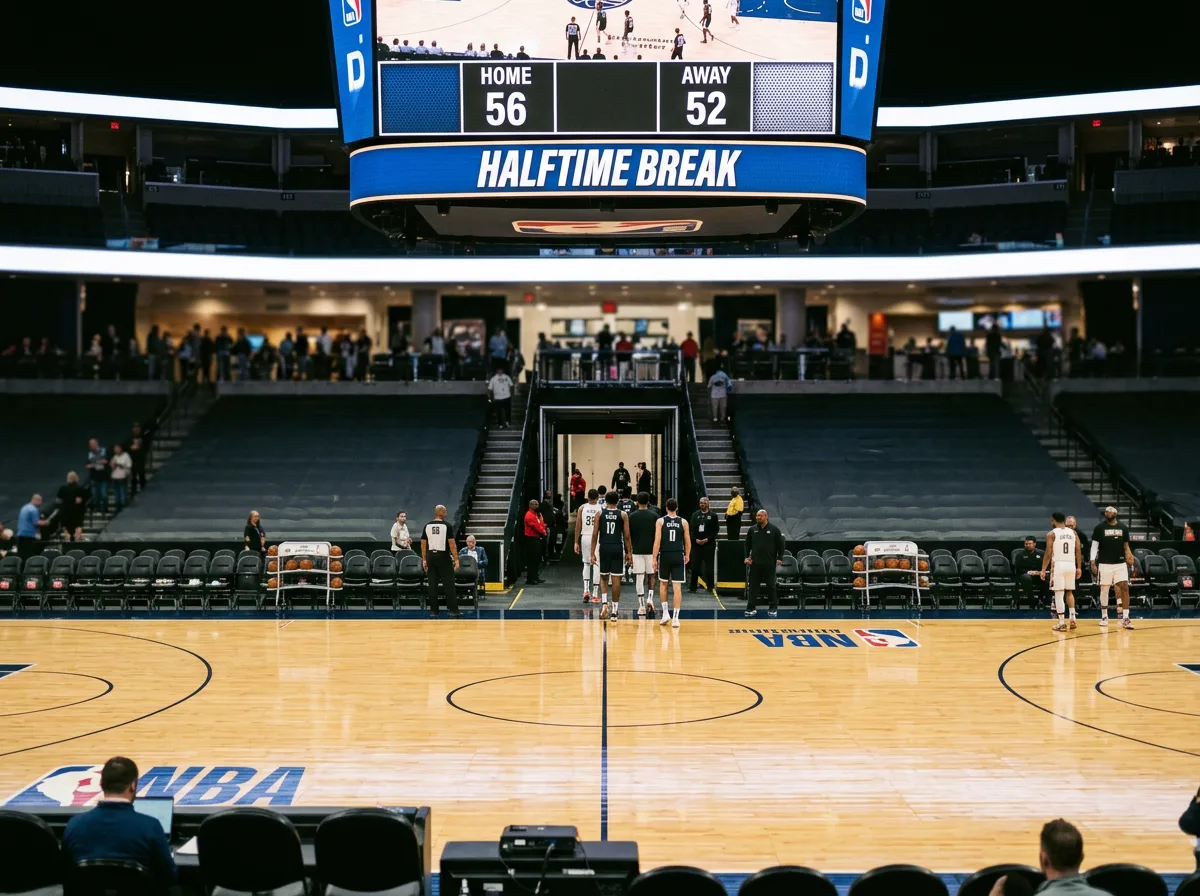
The Suns led by eighteen at halftime, and the second half line appeared at Phoenix -3.5. Something felt wrong – Boston had shot terribly from three, their stars had barely touched the ball, and the crowd was flat. I bet the Celtics second half spread. They outscored Phoenix by fourteen after the break. The first half told a misleading story; the second half reflected actual team quality.
Half time betting offers NBA markets that reset during the break, covering only the final two quarters. These bets carry distinct characteristics from full-game wagering – halftime adjustments, fatigue patterns, and first-half variance all influence second-half outcomes differently than complete game analysis. Understanding these dynamics creates opportunities for bettors willing to analyse games within games.
Second Half Market Mechanics
Second half lines post during halftime, typically giving bettors five to ten minutes to evaluate and place wagers. The spread reflects bookmaker projections for only the remaining 24 minutes, independent of first half results. A team down twenty still might be favoured in the second half if their quality exceeds their opponent.
Totals also reset for second halves. The first-half total might have gone dramatically over or under; the second-half total adjusts based on anticipated remaining scoring rather than first-half pace. A high-scoring first half does not necessarily mean high-scoring second half – regression and fatigue often intervene.
Lines incorporate first-half information but not mechanically. If a favourite trailed by ten despite outplaying their opponent statistically – better shot quality, more possessions, worse shooting luck – the second-half spread might still favour them. Bookmakers evaluate quality rather than just score.
UK bookmakers offer second-half markets with varying depth. Major platforms provide spreads and totals; some add player props for remaining quarters. Availability peaks during primetime NBA games that attract significant betting interest.
First Half Information Value
What you observe during the first half provides crucial context unavailable pre-game. How are teams defending specific actions? Which players have rhythm? Which matchups are causing problems? This real-time information improves second-half projections beyond what pre-game analysis could capture.
Shooting variance often corrects in second halves. A team shooting 65% from three in the first half will likely cool off. A team misfiring at 20% will likely improve. Regression toward seasonal averages affects second-half expectations – extreme first-half performances often do not sustain.
Foul trouble changes second-half dynamics significantly. A star with three first-half fouls might play cautiously or sit extended second-half minutes. His team’s projection should adjust for his diminished impact. Foul trouble creates asymmetric second-half situations invisible in pre-game analysis.
Coaching adjustments manifest after halftime. Teams down big often change defensive schemes, rotation patterns, or offensive emphasis. These adjustments can dramatically shift team performance relative to first-half output. Anticipating which coaches adjust well – and which repeat failing strategies – informs second-half betting.
Trailing Team Analysis
Teams behind at halftime demonstrate historical patterns that inform second-half betting. Quality teams trailing modest amounts typically bounce back; they have talent to overcome deficits through normal variance correction and coaching adjustment.
Large deficits present different dynamics. Teams down twenty face a choice: mount a serious comeback attempt or surrender and preserve energy for future games. Reading which approach a team takes – based on season context, rest schedule, and player body language – guides second-half positioning.
Garbage time affects second-half totals and spreads. When games become uncompetitive, both teams empty benches and scoring patterns change unpredictably. A team trailing by thirty might outscore their opponent in a meaningless fourth quarter, covering second-half spreads despite never threatening the outcome.
Motivation differentials emerge more clearly after halftime. A team with playoff positioning at stake trails a team already eliminated – which plays harder in the second half? These situational factors become clearer as game context develops.
Second Half Patterns
Research shows 19% of NBA games are decided in the fourth quarter, making late-game performance crucial for second-half betting. Teams that close games well offer second-half value; teams that fade late destroy second-half covers.
Fatigue manifests more heavily in second halves, particularly for teams on back-to-backs or heavy recent schedules. A tired team might perform adequately in the first half on adrenaline, then collapse as physical limits assert themselves. Second-half fades from fatigued teams create predictable patterns.
Home court advantage arguably intensifies in second halves. Crowd energy peaks during crucial moments; familiar surroundings comfort tired players. The three-point home advantage that applies to full games might slightly increase for second-half-only markets.
Teams with superior depth outperform in second halves because fresh bench players sustain effort while opponents tire. Analysing rotation depth helps predict which teams maintain or improve second-half performance versus which teams decline.
Totals in Second Halves
Second-half totals require different analysis than full-game totals. A high-scoring first half sometimes indicates an over trend continuing; other times it signals regression as defences tighten and pace slows. Reading which pattern applies requires evaluating why the first half scored as it did.
Blowout situations create unusual second-half total dynamics. When one team leads by twenty-five, both teams might slow pace dramatically – starters rest, benches play conservatively, and scoring drops. These garbage-time situations often push second-half unders regardless of first-half scoring.
Competitive games tend to maintain or increase intensity in second halves. Teams fighting for wins push pace, take more risks, and generate scoring opportunities. The tight first-half games often produce exciting second halves that trend toward overs.
Practical Second Half Betting
Preparation before tip-off improves halftime decisions. Know what you are looking for during the first half – which matchups matter, which players are questionable, what coaching tendencies each team shows. This framework enables rapid halftime analysis rather than scrambling.
Second-half betting suits UK bettors who stay up for late games. If you are watching live, you can evaluate first-half developments yourself. If you are sleeping through games, pre-game bets make more sense since you cannot observe halftime information.
Avoid overreacting to first-half results. Just because a team scored 70 first-half points does not mean they will repeat. Just because a team shot poorly does not guarantee improvement. Regression is your friend and enemy simultaneously – it corrects first-half extremes regardless of which direction.
Second-half betting integrates with live betting strategies as another avenue for in-game wagering. The halftime break provides a natural reset where markets pause for evaluation rather than continuously adjusting. This structure suits bettors who prefer deliberate analysis over rapid live betting decisions.
Articles
Published by the nbaexpertbets.com team.
