

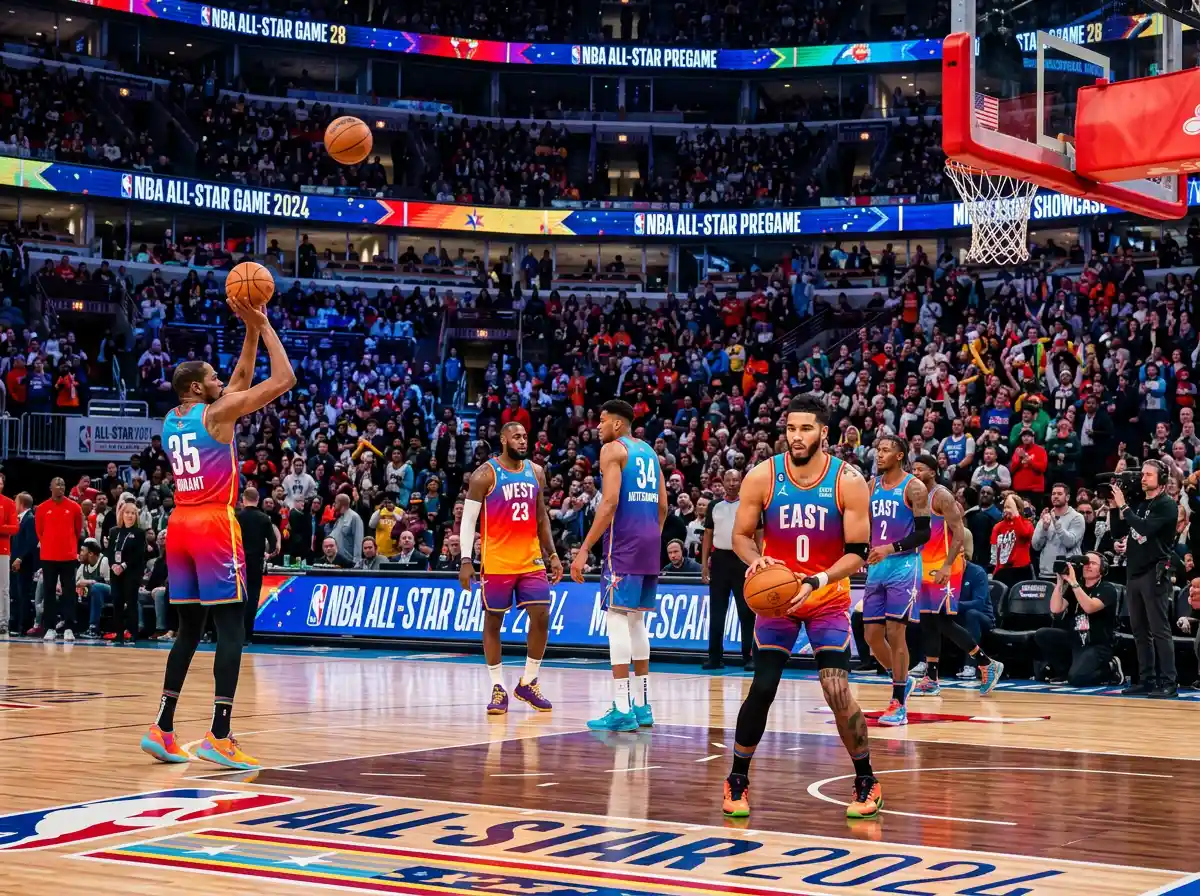
The All-Star Game total sat at 320 points. I laughed, placed the over, then watched two teams combine for 374 points in a defensive exhibition that made summer pickup games look intense. The following year the total was 350 and went under. All-Star betting taught me that exhibition basketball follows different rules – and those rules change unpredictably based on format, motivation, and who happens to feel like competing.
NBA All-Star weekend attracts enormous betting interest despite being fundamentally different from regular season basketball. The midseason exhibition features zero defensive effort for most of its duration, experimental format changes nearly every year, and outcomes determined more by which players feel like trying than by systematic analysis. Betting these events requires accepting their chaotic nature rather than applying normal basketball frameworks.
All-Star Game Format Evolution
The NBA constantly tinkers with All-Star Game format, making historical analysis largely useless. Traditional East versus West gave way to captain-drafted teams. Elimination-style fourth quarters replaced standard timing. Mini-tournaments with multiple teams replaced single games. Each format change renders previous results non-comparable.
Recent format changes have attempted to introduce competitive stakes. Target scores requiring a team to reach a specific point total to win, charitable donations tied to performance, and multi-game tournaments all aimed to manufacture intensity. Results have varied – some innovations created genuine late-game tension while others fell flat.
Understanding the current year’s format is essential before betting. Research what rules govern this year’s event, what incentives players have to compete, and how previous iterations of similar formats unfolded. The event you are betting might barely resemble last year’s All-Star Game.
Player participation varies within games. Starters might play five minutes; reserves might never enter. Load management extends even to exhibition games as players protect themselves for the stretch run. Predicting playing time is nearly impossible, making player prop analysis unreliable.
Totals Betting Approach
All-Star Game totals challenge analysis because defensive effort is essentially optional. Teams routinely score 150+ points in halves where every possession ends in a layup or uncontested three. These offensive explosions are not anomalies – they are the norm when elite offensive players face no resistance.
The late-game dynamic often differs from early game. When formats introduce competitive elements for the final minutes, actual defence sometimes appears. A game cruising toward 400 combined points might slow dramatically in a target-score fourth quarter as teams actually contest shots.
Three-point shooting volume has exploded in All-Star Games. Players jack up threes without consequence, sometimes hitting at unsustainable rates, sometimes clanking their way through cold streaks. This variance makes total projections even less reliable – the same players might combine for 30 made threes or 15 depending on random shooting fluctuation.
Historical totals provide minimal guidance because format changes alter scoring dynamics. A total of 320 under traditional format differs entirely from 320 under target-score format. Analyse this year’s specific rules rather than applying historical averages.
Player Props Considerations
All-Star Game player props attract recreational money because betting on individual stars feels engaging during an exhibition. However, these props carry enormous variance due to unpredictable playing time and effort levels.
MVP betting represents the most popular All-Star prop. Winners typically come from the winning team’s best performer in crunch time – when competitive elements kick in. Star power matters, but so does willingness to engage when most players are coasting.
Points props for individual players assume unknowable playing time. A star projected to score 25 might play 15 minutes and score 12. Another star might randomly play 30 minutes and score 40. These outcomes depend on game flow, blowout dynamics, and coach decisions made in real-time.
Three-point contest and dunk contest props offer more contained betting opportunities. These events have clear rules, fixed participation, and measurable outcomes. While variance remains high, the structure is at least predictable – unlike the main game’s chaos.
Betting All-Star Weekend Events
Skills Challenge, Three-Point Contest, and Slam Dunk Contest offer betting markets beyond the main game. These events feature smaller fields and more predictable formats, though outcomes still depend heavily on performance variance.
Three-Point Contest betting involves assessing current shooting form against historical performance. Elite shooters remain elite, but contest conditions differ from game conditions. Pressure, timing, and rack navigation all affect results. Past contest performance matters more than regular season three-point percentages.
Slam Dunk Contest outcomes depend almost entirely on creativity and execution quality that cannot be predicted. Betting these markets is essentially gambling on which player will produce the most impressive dunks – analysis offers minimal edge.
Rising Stars Game provides a more basketball-like betting opportunity than the main All-Star Game. Younger players often compete harder to showcase abilities, producing something closer to normal basketball. If betting All-Star weekend, this event might offer the most analysable outcomes.
Celebrity and Skills Events
All-Star weekend includes celebrity games and skills competitions that sometimes attract betting markets. These events feature even more randomness than the main game – amateur participants, unusual rules, and pure entertainment focus make systematic betting essentially impossible.
The Skills Challenge pits players against timed obstacle courses testing passing, dribbling, and shooting. Smaller guards historically excel due to agility advantages, but upsets happen regularly when big men surprise with skill demonstrations. These small-field events offer accessible betting but resist analysis.
Betting celebrity events involves assessing athletic backgrounds of participants – former college players, professional athletes from other sports, and genuinely amateur celebrities produce wildly different performance levels. Entertainment value exceeds analytical value for these markets.
UK Bookmaker All-Star Markets
UK bookmakers offer All-Star Game markets including game spreads, totals, MVP betting, and various props. Market depth varies – major platforms provide comprehensive options while smaller operators might offer only basic game lines.
Timing matters for All-Star betting. Lines post well before the event and adjust based on roster announcements, injury news, and betting action. Captains selecting teams changes dynamics from traditional conference-based rosters – wait until team composition is confirmed before betting.
Limits on All-Star bets are typically lower than regular season games. Bookmakers recognise the exhibition nature and reduce exposure to unpredictable outcomes. Large wagers might face restrictions or require approval.
All-Star betting represents entertainment wagering more than strategic betting for most people. The event’s unpredictability makes systematic edge identification nearly impossible. Approach All-Star markets as recreational fun rather than expecting them to fit within normal NBA betting strategy frameworks.
Articles
Written by the editors at nbaexpertbets.com.
