

American odds confused me for years. What does -110 even mean? When I started betting NBA seriously, I had to translate every line from US format to something that made intuitive sense. Then I realised UK bookmakers already did this work – decimal odds show exactly what your stake returns. That simplicity transformed how I approached basketball wagering.
British bettors navigating NBA markets encounter decimal odds as standard, which differs from the American odds dominating US coverage. Understanding how to read these numbers, calculate payouts, and convert between formats when necessary gives you fluency across all NBA betting resources. With 10% of the UK population actively betting online, these skills matter for anyone serious about basketball wagering.
Decimal Odds Explained
Decimal odds represent total return per unit staked, including your original stake. If odds show 2.50, a £10 bet returns £25 total – your £10 stake plus £15 profit. This straightforward calculation makes decimal format ideal for comparing options and calculating potential returns.
The number 2.00 represents even money – you double your stake if you win. Odds below 2.00 indicate favourites; odds above 2.00 indicate underdogs. The further from 2.00, the stronger the probability implication. Odds of 1.20 suggest heavy favourite status; odds of 5.00 suggest significant underdog.
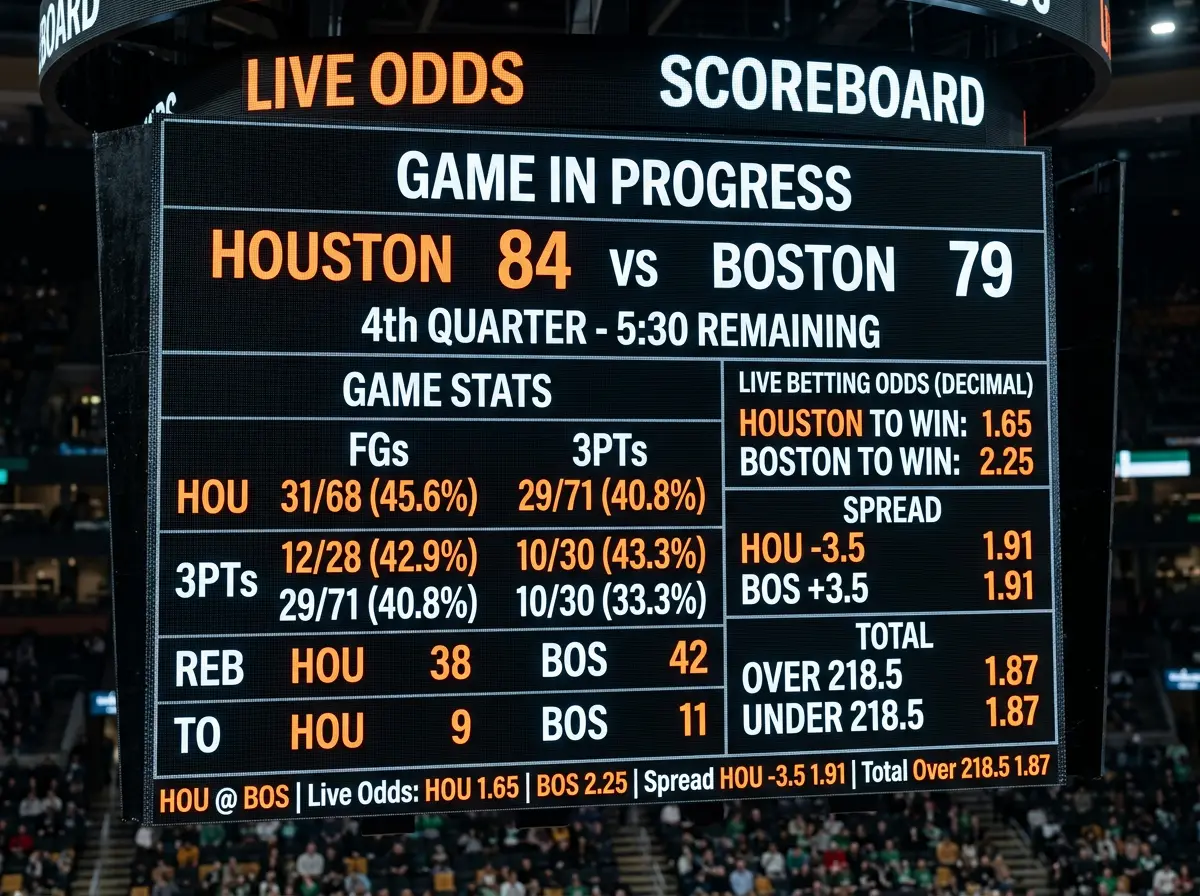
Standard NBA spread odds at UK bookmakers typically show 1.91 each side. This number reflects the bookmaker’s margin – true even-money on equally likely outcomes would be 2.00, but the house takes a cut. That difference between theoretical 2.00 and offered 1.91 represents the juice you pay for the privilege of betting.
Comparing decimal odds across bookmakers reveals value instantly. If one site offers 1.95 on a spread while another offers 1.87, you immediately see which provides better value. This transparency helps UK bettors shop lines effectively, an essential skill for maximising returns.
Converting American to Decimal
American odds dominate US betting content, so conversion skills help when consuming analysis from American sources. Positive American odds convert by dividing by 100 and adding 1. American +150 becomes 2.50 decimal (150/100 + 1).
Negative American odds require different calculation. Divide 100 by the absolute value, then add 1. American -150 becomes 1.67 decimal (100/150 + 1 = 0.67 + 1). The negative sign indicates favouritism; the conversion produces numbers below 2.00.
Common conversions worth memorising: -110 American equals 1.91 decimal (standard juice line). +100 equals 2.00 (even money). -200 equals 1.50 (significant favourite). +200 equals 3.00 (meaningful underdog). These reference points let you quickly interpret American commentary.
Online converters handle complex conversions instantly, but understanding the underlying mathematics helps you spot errors and develop intuition for relative probability. When someone mentions a team is +350, you should immediately sense that equals 4.50 decimal – a roughly 22% implied probability.
Implied Probability
Decimal odds convert directly to implied probability by dividing 1 by the odds. If a team shows 2.50 odds, their implied probability is 1/2.50 = 0.40 or 40%. This percentage represents the probability the bookmaker prices into the line, including their margin.
Calculating true implied probability requires removing the bookmaker margin. When both sides of a spread show 1.91, each implies 52.4% probability (1/1.91 = 0.524). These probabilities sum to 104.8%, meaning 4.8 percentage points represent the overround – the bookmaker’s theoretical profit margin.
Comparing your assessed probability against implied probability identifies value. If you believe a team wins 55% of the time but the market implies only 50%, that gap represents potential edge. Systematic identification of these discrepancies underlies profitable sports betting.
Implied probability also helps assess risk. A bet at 1.30 odds implies roughly 77% chance of success – you need to win more than three-quarters of these bets to profit. Understanding these breakeven rates frames realistic expectations for different odds ranges.
Reading UK Bookmaker Lines
UK bookmaker NBA presentation differs from American formats. Spreads display as handicaps with decimal odds rather than American moneylines. A team at -4.5 at 1.91 means they must win by 5+ points, with successful £10 bets returning £19.10.
Totals appear similarly – the line with over/under options, each priced in decimal format. A total of 223.5 with over at 1.95 and under at 1.87 shows slight market lean toward the under (lower odds indicate more expected betting action or higher bookmaker confidence).
Moneylines display directly as decimal odds without spread considerations. Lakers 1.45 / Celtics 2.80 means the Lakers are strong favourites. Unlike American format where you parse positive and negative numbers, decimal shows favourite/underdog status instantly – lower number wins more often, higher number pays more.
Player props use the same decimal framework. LeBron James over 27.5 points at 1.85 pays £18.50 per £10 wagered. The consistency across market types means mastering decimal format once applies everywhere.
Common Odds Benchmarks
Certain decimal odds appear frequently in NBA betting, worth committing to memory. Standard spread and total lines show 1.91 or 1.92 at most UK bookmakers – this represents roughly 52.4% implied probability with standard juice. Anything above 1.95 on standard lines indicates favourable pricing worth noting.
Heavy favourites on moneylines typically range from 1.20 to 1.50. At 1.25, you risk £4 to profit £1 – requiring 80% win rate to break even. These short prices suit high-confidence plays where strong favourites dominate outright, but the margin for error shrinks dramatically.
Meaningful underdogs range from 2.50 to 4.00 on moneylines. A +200 American line (3.00 decimal) implies roughly 33% win probability. These longer odds require less frequent winning but demand discipline in selection since losses accumulate quickly against wins.
Payout Calculations
Mental maths for decimal payouts is simple: stake times odds equals total return. A £25 bet at 1.80 returns £45 (25 × 1.80). Profit calculation subtracts original stake: £45 – £25 = £20 profit.
Parlay calculations multiply odds across legs. A two-leg accumulator at 1.91 and 1.91 pays 3.65 combined (1.91 × 1.91 = 3.6481). Your £10 returns £36.50 if both legs hit. Each additional leg multiplies further, explaining both parlay appeal and the compounding house edge.
Comparing payout scenarios helps bet selection. Is it better to place one £50 bet at 2.00 or two £25 bets at 1.91? The single bet returns £100 if it wins; the pair returns £47.75 per winning bet, requiring both to hit for £95.50. Understanding these tradeoffs improves stake allocation.
Building proficiency with NBA betting fundamentals includes fluency with odds formats. The more automatic these calculations become, the more mental energy remains for actual game analysis rather than numerical logistics.
Articles
Published by the nbaexpertbets.com team.
