

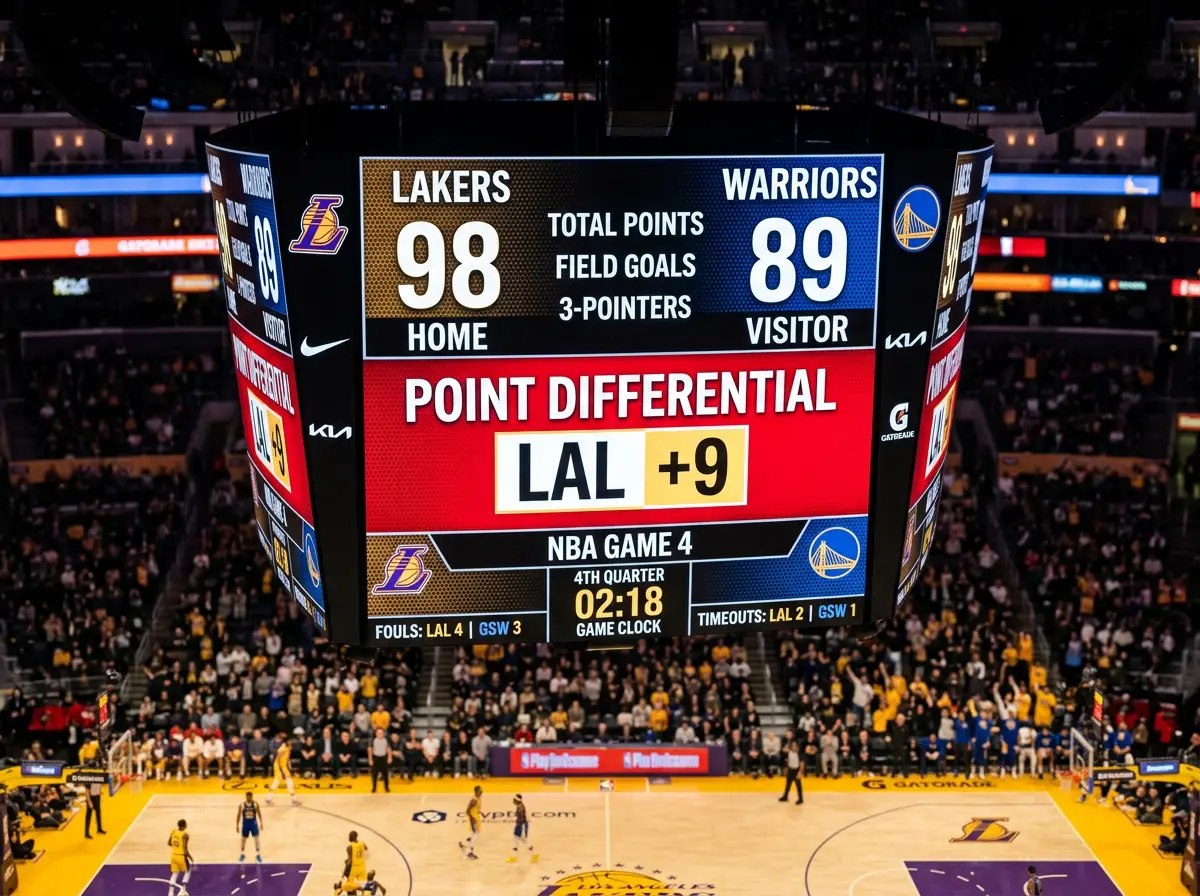
My first NBA bet was a Lakers moneyline at 1.15 odds. They won, I collected my pittance, and I wondered why anyone bothered with this. Then I discovered spreads – suddenly that same game offered 1.91 on either side, transforming a foregone conclusion into a genuine puzzle. Spread betting is where basketball wagering actually gets interesting.
Point spread betting levels the playing field between mismatched opponents. Rather than simply picking winners – which often means backing heavy favourites at poor odds – spreads ask bettors to predict margins of victory. This format dominates NBA betting volume because it creates compelling decisions on every game, regardless of how lopsided the talent comparison appears.
How Spreads Work
A point spread represents the bookmaker’s predicted margin of victory. When the Celtics appear as -6.5 favourites against the Pacers, the market expects Boston to win by roughly seven points. The half-point ensures no pushes – every bet resolves as a win or loss.
Betting the favourite requires them to win by more than the spread. Celtics -6.5 means Boston must win by seven or more for your bet to cash. Winning by exactly six loses because they did not cover the spread. The spread creates a hurdle the favourite must clear.
Betting the underdog adds points to their final score. Pacers +6.5 means Indiana can lose by up to six and your bet still wins. They effectively start with a 6.5-point head start that gets added after the final buzzer. Underdogs can lose the game while winning your bet.
Standard spread odds at UK bookmakers show 1.91 on each side, representing the juice or vigorish the house charges. In a perfectly balanced market, the bookmaker profits regardless of outcome. Your winning bet returns £19.10 for every £10 wagered.
Reading Point Spreads
Negative numbers indicate favourites; positive numbers indicate underdogs. Lakers -4.5 means Los Angeles is favoured to win by around five points. Clippers +4.5 means the market expects them to lose by that margin. The numbers are always mirror images – one side’s -4.5 is the other’s +4.5.
Spread size indicates perceived mismatch. A -2.5 spread suggests a close game between relatively equal teams. A -12.5 spread signals significant talent disparity. The largest NBA spreads typically reach -15 to -18 points for extreme mismatches.
Half-points eliminate push possibilities. Rather than returning stakes when a game lands exactly on the spread, half-points force decisions. Some bettors prefer buying to key numbers like -6.5 or +7.5 to avoid potential heartbreak on common margins.
Line movement between opening and closing tells a story. A spread opening at -5 and closing at -7 indicates money flowing toward the favourite – sharps or the public believe the favourite will win by more than originally projected. Tracking movement helps identify market sentiment.
Spread vs Moneyline
Moneylines offer pure win/lose propositions while spreads focus on margin. A team at -6.5 spread might be -280 on the moneyline – meaning you risk £280 to win £100 simply picking them to win outright. The spread at 1.91 offers far better value when you believe the favourite covers.
Small spread favourites present interesting decisions. A team at -2.5 spread and -140 moneyline offers two distinct bets. The spread requires winning by three or more; the moneyline just requires winning. If you think they win a close game, moneyline makes sense. If you expect a comfortable victory, the spread pays better.
Large underdogs similarly offer dual options. A +12 underdog at massive moneyline odds might deserve small moneyline shots if upset potential exists, while the spread offers more consistent returns for teams that compete without winning.
Most experienced bettors focus on spreads because they offer the most consistent odds across outcomes. Moneylines make sense for small dogs with genuine upset potential or when parlays require outright winners.
Key Numbers in NBA
Certain margins occur more frequently than others, making spreads landing on those numbers particularly valuable. Unlike American football’s emphasis on 3 and 7, NBA key numbers prove less dramatic because basketball’s continuous scoring produces varied margins.
Seven points represents the most common NBA margin, followed by five, six, and eight. Games rarely finish with exactly these margins – basketball’s high scoring creates variance – but they appear more often than other numbers. Spreads crossing these thresholds deserve attention.
Small spreads carry more key number significance than large ones. The difference between -3.5 and -4.5 matters more than between -12.5 and -13.5 because more games land in the three-to-five range than the twelve-to-fourteen range.
Buying points through alternative spreads lets you cross key numbers at reduced odds. Moving -7.5 to -6.5 costs juice but captures all seven-point favourite wins. Whether this trade makes mathematical sense depends on specific numbers and your confidence level.
Spread Betting Strategy
Successful spread betting requires predicting margins rather than winners. A team can be clearly better while still failing to cover inflated spreads. Focus your analysis on expected margin rather than simply which team wins.
Home court adds roughly three points to expected margin. A team that would be -4 on a neutral court becomes -7 at home and -1 on the road. This adjustment is baked into lines but understanding it helps frame spread analysis.
Recent performance creates spread value in both directions. Teams riding hot streaks attract public money, potentially inflating spreads beyond fair value. Teams struggling get faded, sometimes creating underdog value when their underlying quality exceeds recent results.
Integrate spread analysis with other factors: injury impacts, rest advantages, travel schedules, and pace matchups all affect expected margins. The spread represents your entry point for all this analysis – get it right over hundreds of bets and profits follow.
Developing spread intuition takes time. After analysing thousands of games, certain spreads feel wrong immediately. A team getting only +3 when you expected +5 signals market disagreement worth investigating. Trust your gut when it is informed by systematic analysis, but always verify with data.
Spread betting rewards patience and discipline over flashy wins. Grinding out 53% over hundreds of bets generates steady profit without requiring home runs. Accept that many individual bets will lose – the edge materialises across volume, not in any single result.
Articles
Published by the nbaexpertbets.com team.
