

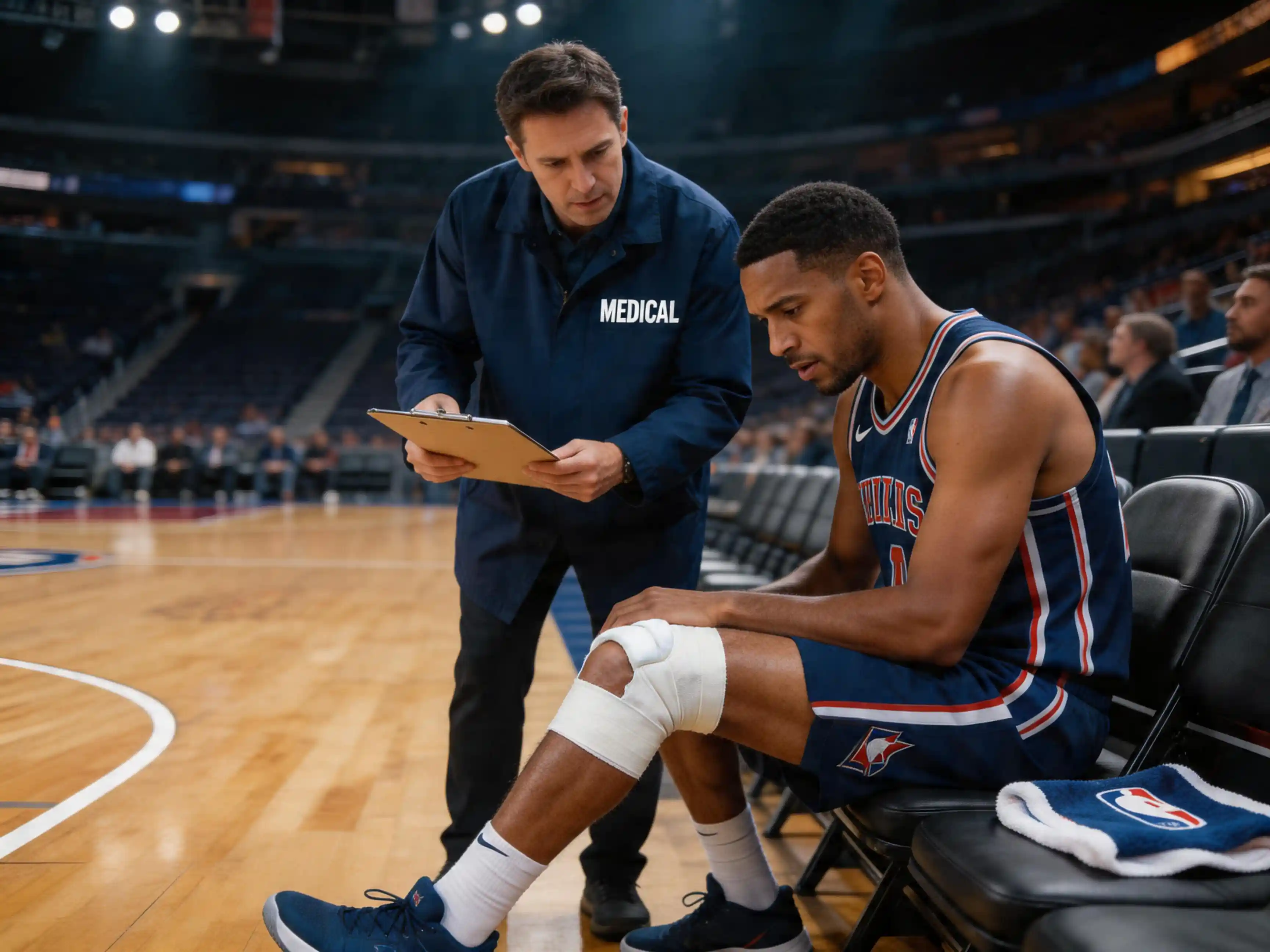
Giannis Antetokounmpo was ruled out 47 minutes before tip-off. I watched the spread move from Bucks -8 to -3.5 within minutes – four and a half points evaporating because one player could not suit up. That movement represented the market’s collective assessment of Giannis’s value, and it taught me that injury timing creates some of the most tradeable opportunities in NBA betting.
Star player absences reshape games fundamentally. Offensive systems designed around elite creators must improvise. Defensive schemes lose anchors. Minutes redistributed to backups who are not accustomed to heavy workloads. Understanding how to quantify these impacts – and when markets over or underreact – separates profitable injury bettors from those who chase news without understanding implications.
How Bookmakers Price Injuries
Bookmakers maintain internal player valuations that determine line adjustments when absences occur. These valuations reflect more than just scoring averages – they incorporate defensive impact, playmaking, leadership, and system importance. A 20-point scorer whose absence disrupts team offence completely might move lines more than a 25-point scorer whose team has redundant options.
Questionable tags present the trickiest pricing challenge. A player listed questionable might play or might not, forcing bookmakers to set lines that account for both possibilities. These lines typically split the difference, creating potential value once status confirms. The market essentially hedges uncertainty, which you can exploit with faster information.
Load management absences – increasingly common for stars resting during back-to-backs – are often priced efficiently because they are predictable. Bookmakers anticipate rest games and set opening lines accordingly. Surprise injuries that occur in practice or warm-ups create more significant market adjustments because the unexpected element catches everyone off guard.
Star Player Point Values
The general rule among sharp bettors: an MVP-calibre player is worth 5-7 points to the spread. Elite All-Stars typically command 3-5 points. Quality starters move lines 1-3 points. Rotation players rarely shift lines meaningfully unless multiple absences compound.
Anindya Sen, the NBA’s integrity monitor, approaches line movement analysis by asking whether there is a basketball reason that explains the shift. Injuries provide clear basketball reasons. When you see a line move four points without injury news, something else is happening – perhaps sharp money on undisclosed information.
Context matters more than blanket valuations. A star point guard’s absence hurts more when facing elite perimeter defenders who would have keyed on him anyway. A dominant centre sitting matters less against small-ball teams he would struggle to guard. Individual matchup analysis refines generic player values into situation-specific projections.
Team depth influences injury impact. The Warriors without Curry collapse offensively because their system revolves around his gravity. The Celtics without Tatum hurt less because Brown, White, and others can approximate offensive production. Deep teams absorb absences; top-heavy rosters crumble.
Timing Injury News
Speed matters in injury betting. Lines adjust within minutes of official announcements, and early movers capture the best numbers. I keep NBA injury feeds running during afternoon hours when team practice reports typically emerge. The window between news breaking and line adjustment closing shrinks each season as information travels faster.
Pre-game warm-up scratches create the most dramatic opportunities. A player listed probable who then gets ruled out during warm-ups – 30 to 45 minutes before tip-off – triggers rapid line movement. If you are positioned to bet immediately, you might capture a full point or more of value before the market corrects.
Injury severity affects multi-game betting. A player suffering a significant injury might miss weeks, creating opportunities beyond the immediate game. Season win totals, futures, and upcoming spreads all adjust. Understanding typical recovery timelines for different injuries helps project future value, not just same-day opportunities.
Market Reaction Patterns
Markets sometimes overreact to star absences. The emotional response to “LeBron OUT” might move a line six points when historical data suggests the Lakers play only three points worse without him. Recreational bettors panic; sharps exploit the panic by backing the suddenly inflated underdog.
Conversely, markets occasionally underreact to absences that seem minor but prove significant. A backup point guard being out might only move lines half a point, but if the starting point guard already played heavy minutes, fatigue compounds the absence. These subtle impacts escape initial market pricing.
Role player absences compound unexpectedly. Losing both your starting and backup centre simultaneously might matter more than losing one star – the replacement is now someone who never plays. Multiple injuries in the same position group create non-linear impacts that simple player valuations miss.
Return games from injury require their own analysis. A player returning from a two-week absence might be on minutes restriction, affecting their individual props and team performance. Markets often price returns optimistically, creating value on opponents or unders when returning players are not fully integrated.
Depth Chart Analysis for Injury Betting
When a starter sits, someone else plays those minutes. Knowing who – and whether they can produce at replacement level – determines whether injury impact is correctly priced. Some backups are genuine NBA talents limited by roster construction. Others are replacement-level players who get exposed with extended minutes.
Analyse how teams have historically performed without specific players. Sample sizes are often small but informative. If a team went 4-1 without their star last season, perhaps their depth handled absences better than player valuations suggest. Conversely, teams that collapsed without stars should be faded aggressively when injury news hits.
Position scarcity matters. Point guard depth is typically weaker than wing depth across the league. Losing your starting point guard might mean a shooting guard runs point awkwardly, while losing a wing allows sliding positions with less disruption. The specifics of who replaces whom drive impact beyond generic position labels.
Understanding injury betting connects to broader NBA spread analysis because player availability underlies every spread. Treat injury research as ongoing homework rather than game-day scrambling. Know which teams are fragile; know which players carry disproportionate importance. Then when news breaks, you react from knowledge rather than guesswork.
Build a personal injury impact database over time. When stars miss games, record the spread adjustment and actual margin. This historical data becomes invaluable when the same situations recur. Markets are efficient on average, but individual team responses to specific absences reveal patterns that inform future bets.
Follow team beat reporters for injury intelligence beyond official reports. Local journalists often report soft tissue concerns, illness, and load management plans before official announcements.
Articles
Written by the editors at nbaexpertbets.com.
